Work/Life 2.0

New here? Start with this

Work/Life 2.0, explained

Thirteen slides in plain words, for anyone who has never heard of it. About three minutes.
A future lab · explained for everyone Work/Life 2.0 Your idea. An AI team. Your call. What Work/Life 2.0, ParaDaice Lab and clawhaus are, in plain words. No coding knowledge needed. October 2026
Slide 1 of 13
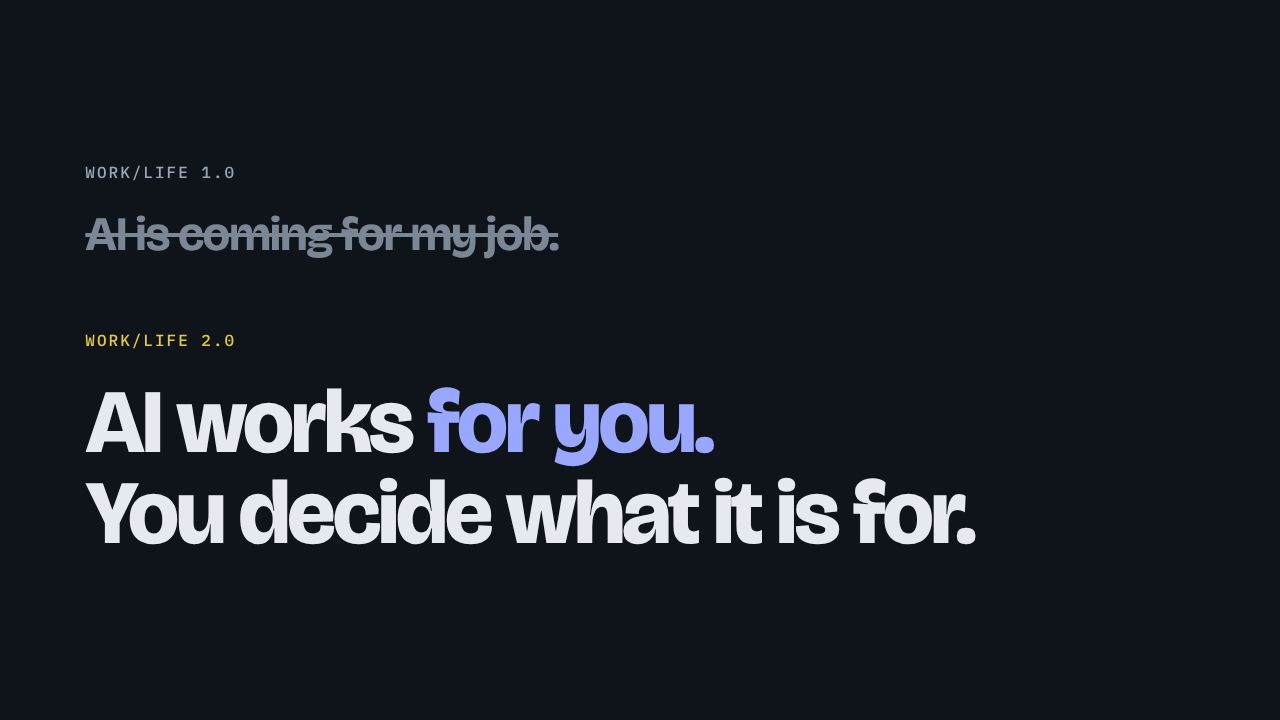
Work/Life 1.0 AI is coming for my job. Work/Life 2.0 AI works for you. You decide what it is for.
Slide 2 of 13
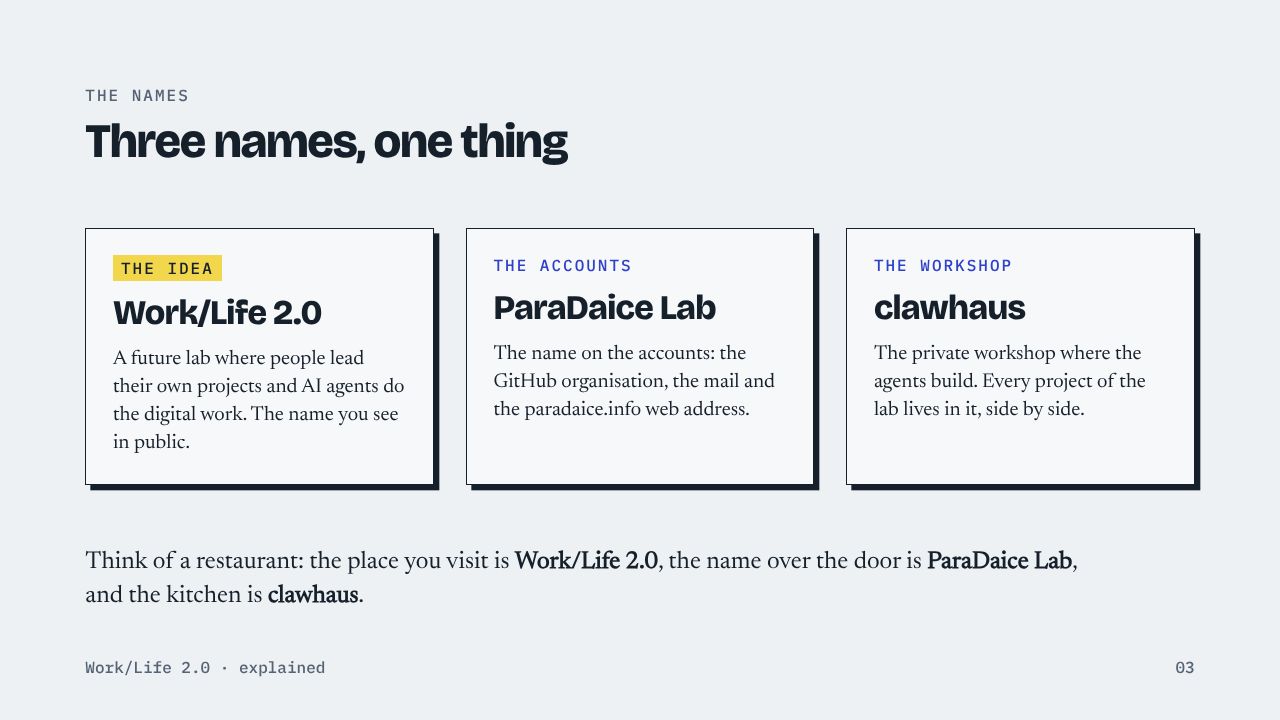
The names Three names, one thing The idea Work/Life 2.0 A future lab where people lead their own projects and AI agents do the digital work. The name you see in public. The accounts ParaDaice Lab The name on the accounts: the GitHub organisation, the mail and the paradaice.info web address. The workshop clawhaus The private workshop where the agents build. Every project of the lab lives in it, side by side. Think of a restaurant: the place you visit is Work/Life 2.0, the name over the door is ParaDaice Lab, and the kitchen is clawhaus. Work/Life 2.0 · explained 03
Slide 3 of 13
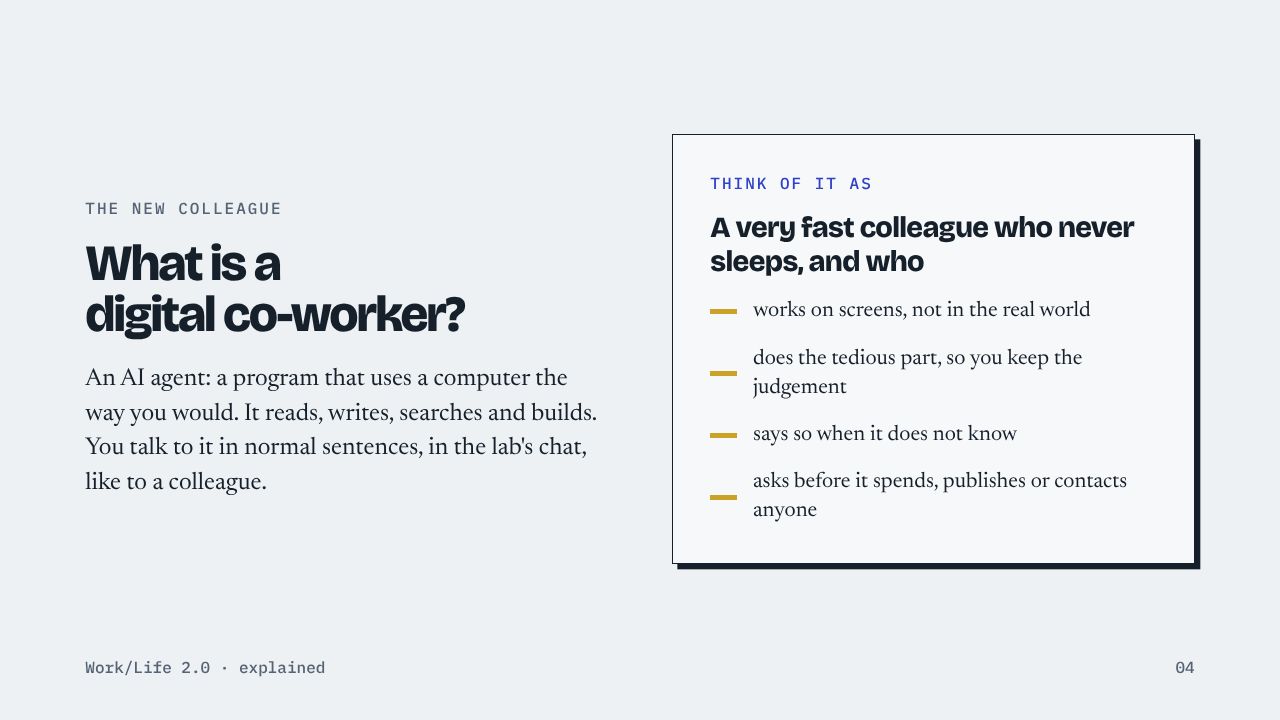
The new colleague What is a digital co-worker? An AI agent: a program that uses a computer the way you would. It reads, writes, searches and builds. You talk to it in normal sentences, in the lab's chat, like to a colleague. Think of it as A very fast colleague who never sleeps, and who works on screens, not in the real world does the tedious part, so you keep the judgement says so when it does not know asks before it spends, publishes or contacts anyone Work/Life 2.0 · explained 04
Slide 4 of 13
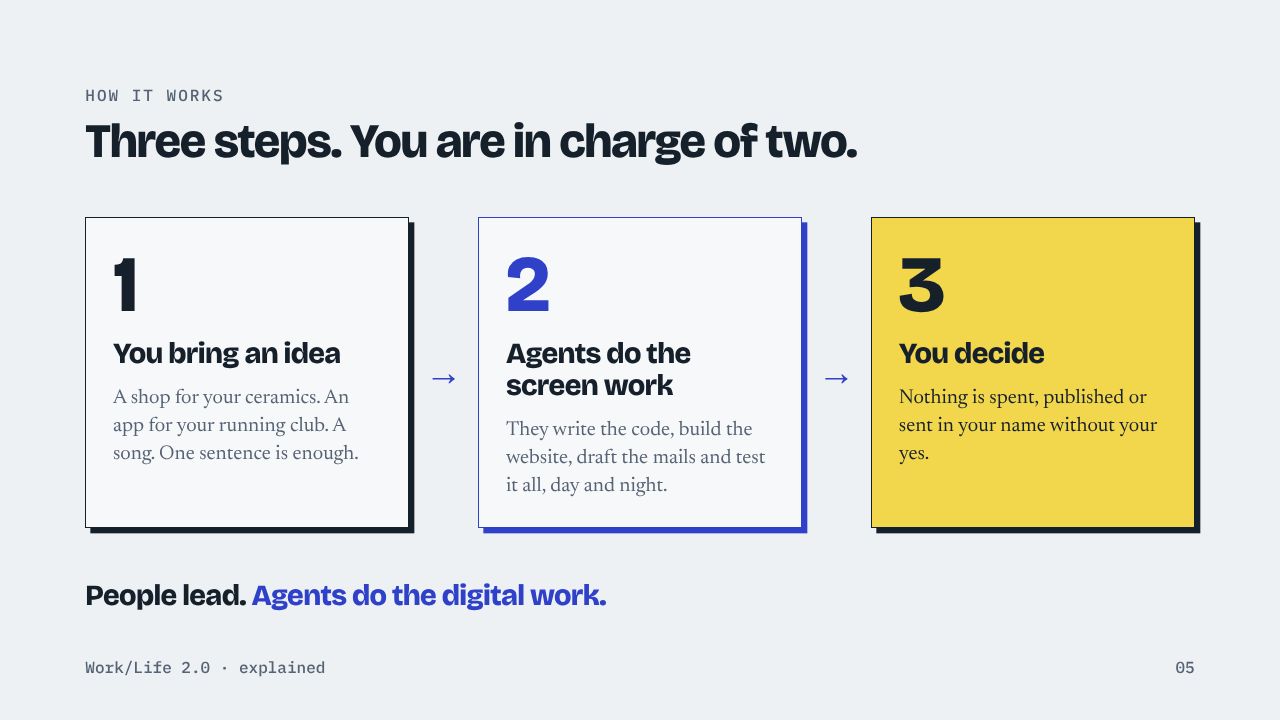
How it works Three steps. You are in charge of two. 1 You bring an idea A shop for your ceramics. An app for your running club. A song. One sentence is enough. → 2 Agents do the screen work They write the code, build the website, draft the mails and test it all, day and night. → 3 You decide Nothing is spent, published or sent in your name without your yes. People lead. Agents do the digital work. Work/Life 2.0 · explained 05
Slide 5 of 13
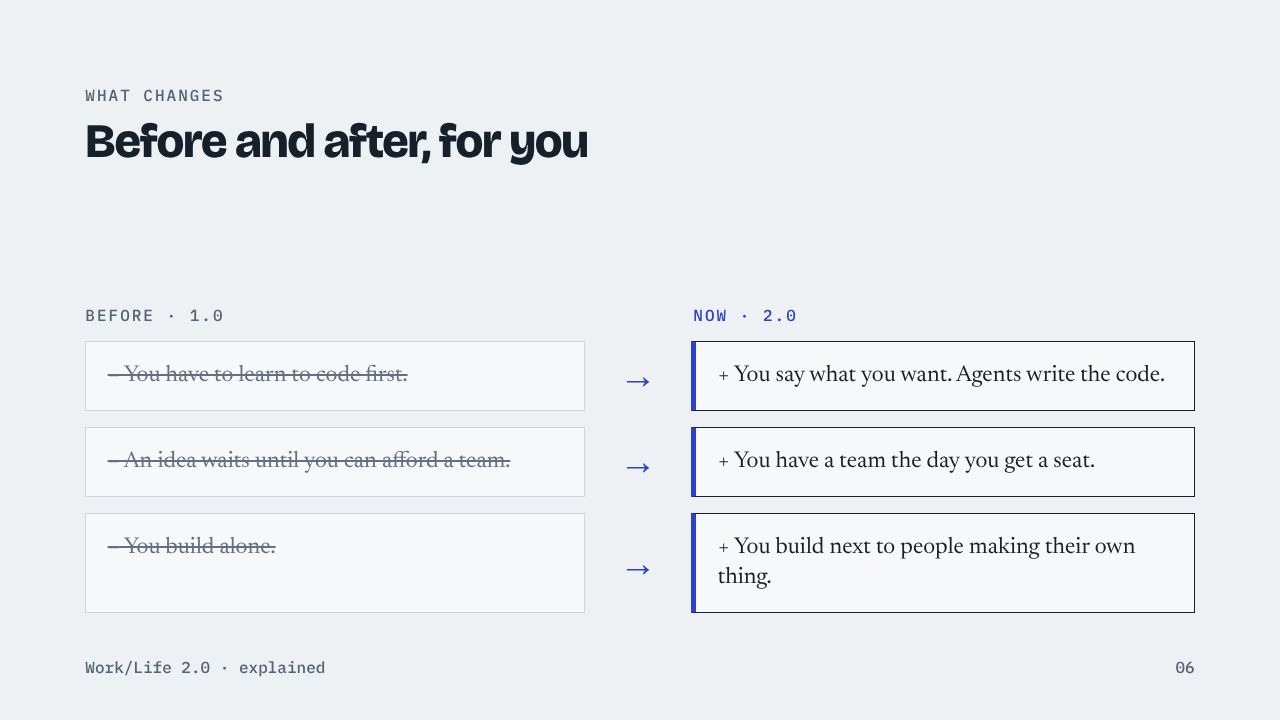
What changes Before and after, for you Before · 1.0 Now · 2.0 − You have to learn to code first. → + You say what you want. Agents write the code. − An idea waits until you can afford a team. → + You have a team the day you get a seat. − You build alone. → + You build next to people making their own thing. Work/Life 2.0 · explained 06
Slide 6 of 13
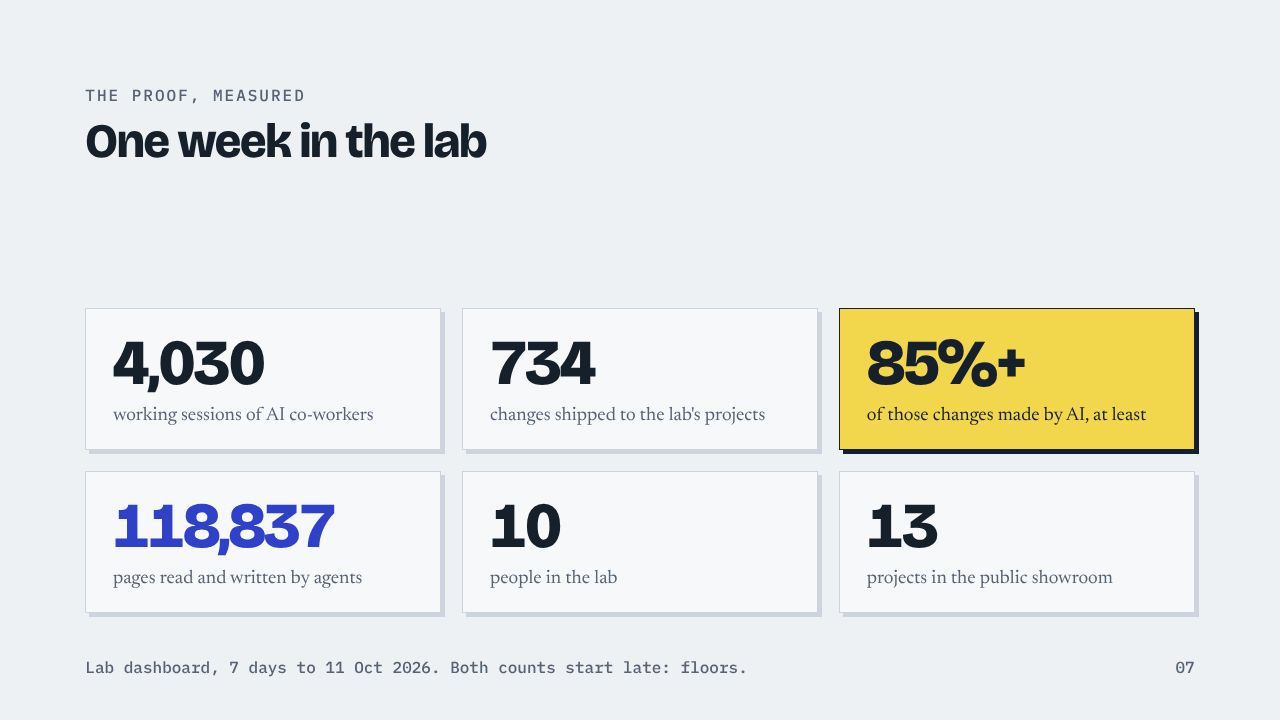
The proof, measured One week in the lab 4,030 working sessions of AI co-workers 734 changes shipped to the lab's projects 85%+ of those changes made by AI, at least 118,837 pages read and written by agents 10 people in the lab 13 projects in the public showroom Lab dashboard, 7 days to 11 Oct 2026. Both counts start late: floors. 07
Slide 7 of 13
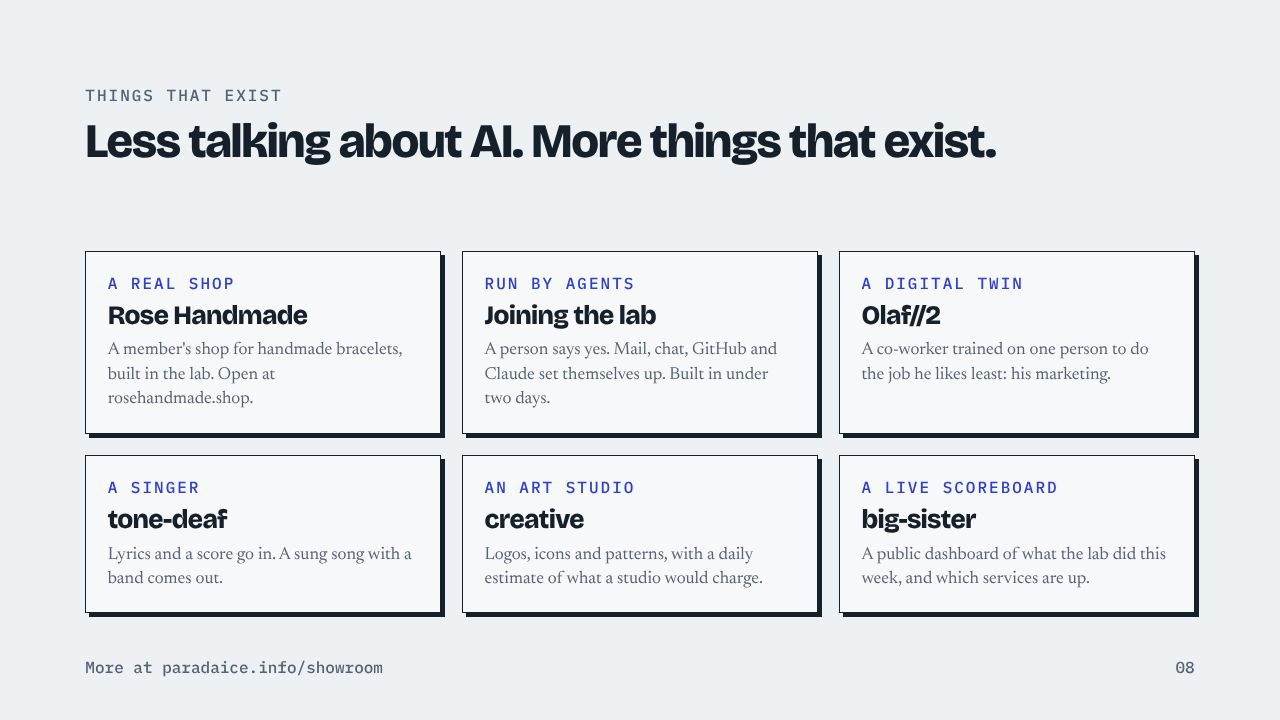
Things that exist Less talking about AI. More things that exist. A real shop Rose Handmade A member's shop for handmade bracelets, built in the lab. Open at rosehandmade.shop. Run by agents Joining the lab A person says yes. Mail, chat, GitHub and Claude set themselves up. Built in under two days. A digital twin Olaf//2 A co-worker trained on one person to do the job he likes least: his marketing. A singer tone-deaf Lyrics and a score go in. A sung song with a band comes out. An art studio creative Logos, icons and patterns, with a daily estimate of what a studio would charge. A live scoreboard big-sister A public dashboard of what the lab did this week, and which services are up. More at paradaice.info/showroom 08
Slide 8 of 13
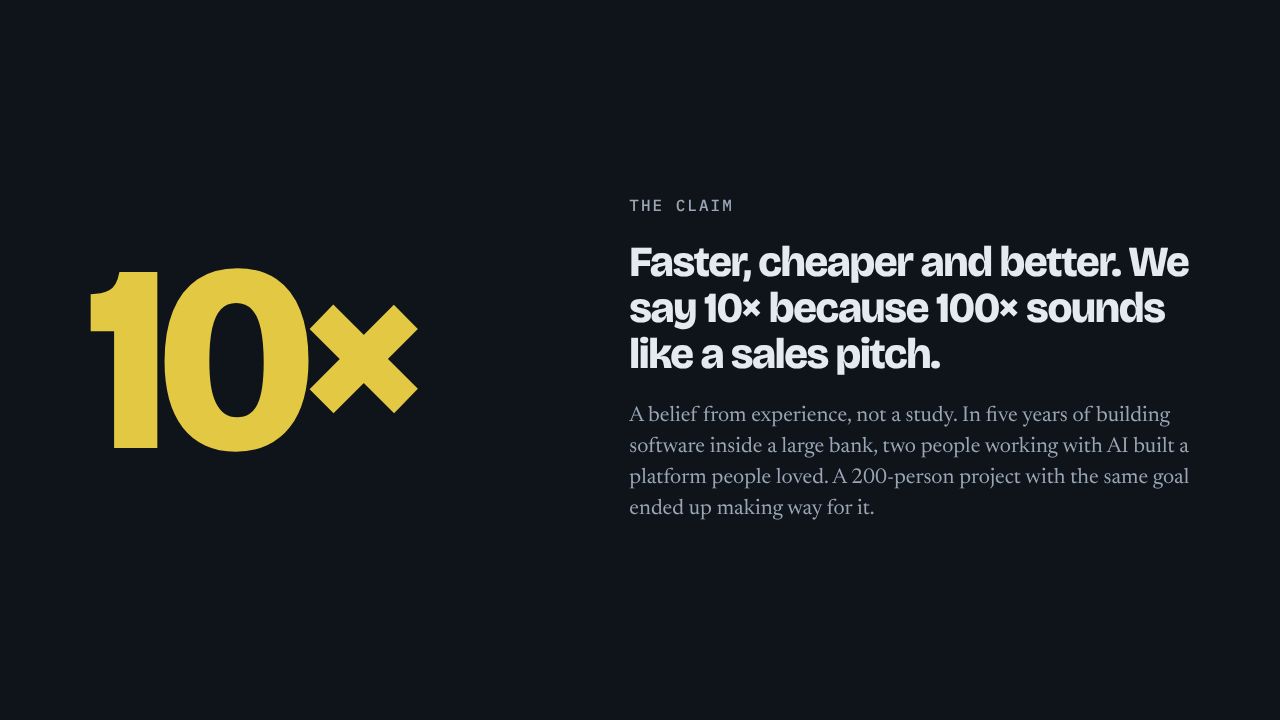
10× The claim Faster, cheaper and better. We say 10× because 100× sounds like a sales pitch. A belief from experience, not a study. In five years of building software inside a large bank, two people working with AI built a platform people loved. A 200-person project with the same goal ended up making way for it.
Slide 9 of 13
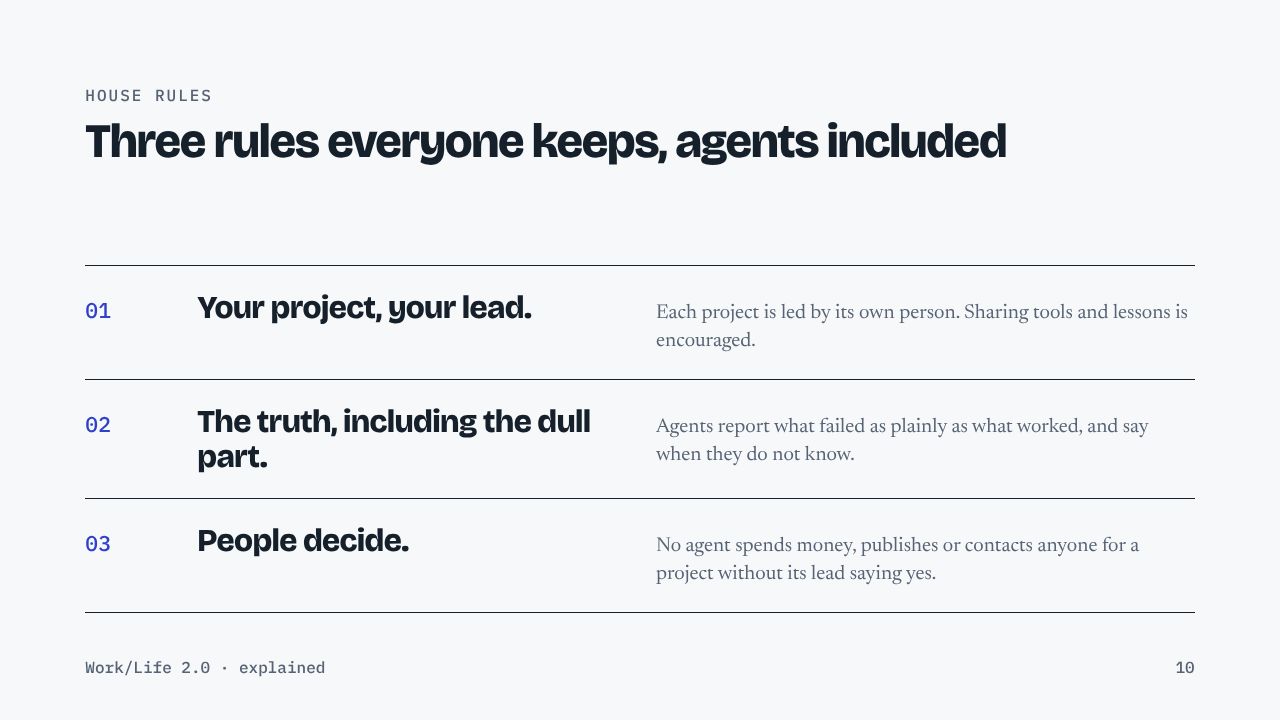
House rules Three rules everyone keeps, agents included 01 Your project, your lead. Each project is led by its own person. Sharing tools and lessons is encouraged. 02 The truth, including the dull part. Agents report what failed as plainly as what worked, and say when they do not know. 03 People decide. No agent spends money, publishes or contacts anyone for a project without its lead saying yes. Work/Life 2.0 · explained 10
Slide 10 of 13
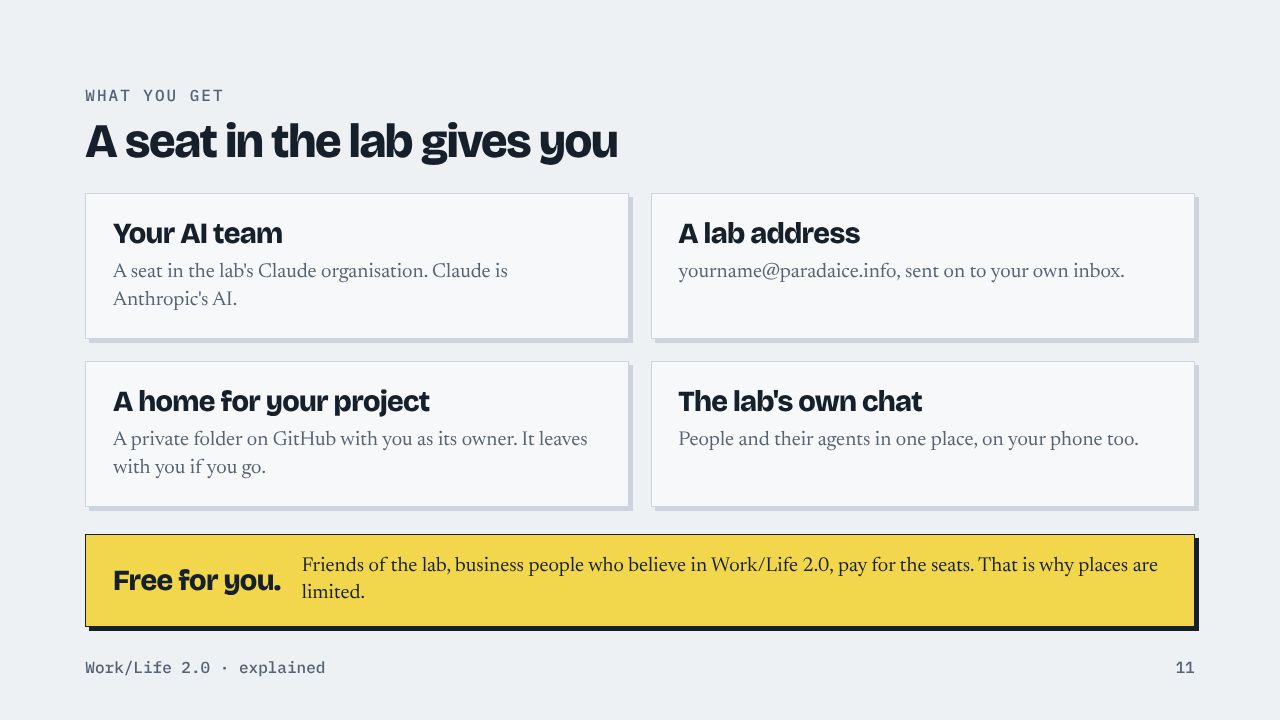
What you get A seat in the lab gives you Your AI team A seat in the lab's Claude organisation. Claude is Anthropic's AI. A lab address yourname@paradaice.info, sent on to your own inbox. A home for your project A private folder on GitHub with you as its owner. It leaves with you if you go. The lab's own chat People and their agents in one place, on your phone too. Free for you. Friends of the lab, business people who believe in Work/Life 2.0, pay for the seats. That is why places are limited. Work/Life 2.0 · explained 11
Slide 11 of 13
Where it lives An old factory in Switzerland. People making things. Someone usually cooking. A community workshop with 3D printers and a wood and metal shop. About fifty members, open around the clock. The lab started there in September 2026. You do not have to come. A seat works from anywhere in the world: the lab's chat is where members and their agents meet.
Slide 12 of 13
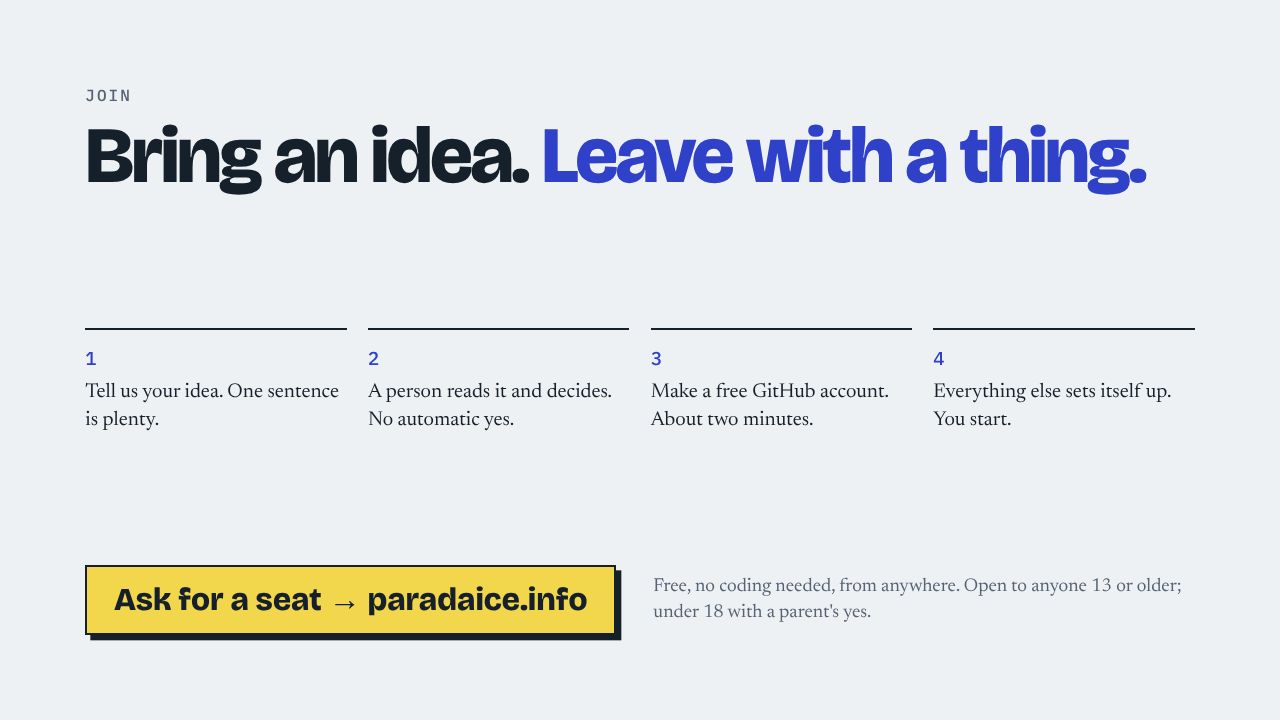
Join Bring an idea. Leave with a thing. 1 Tell us your idea. One sentence is plenty. 2 A person reads it and decides. No automatic yes. 3 Make a free GitHub account. About two minutes. 4 Everything else sets itself up. You start. Ask for a seat → paradaice.info Free, no coding needed, from anywhere. Open to anyone 13 or older; under 18 with a parent's yes.
Slide 13 of 13

Ask for a seat See what the lab has built